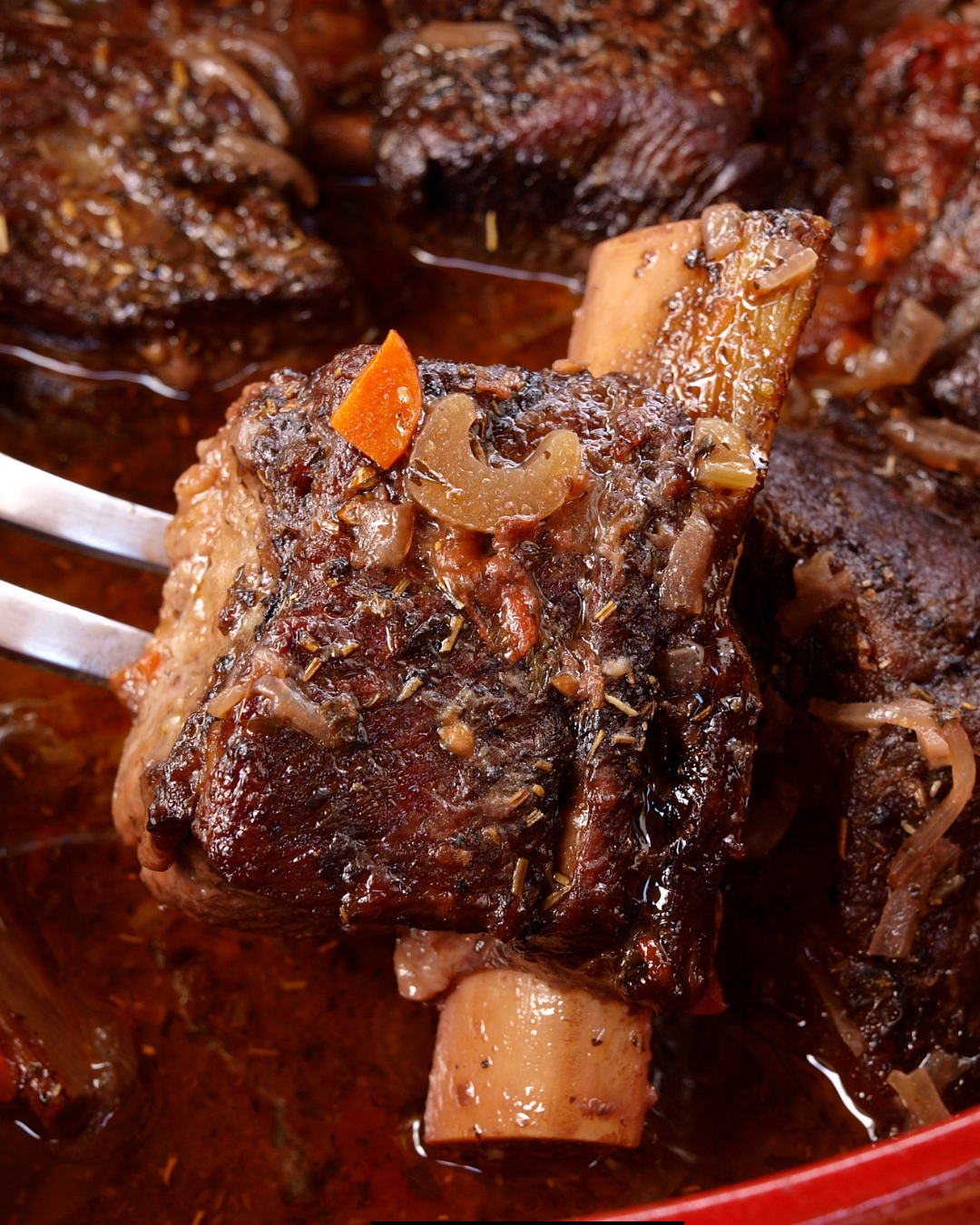
What makes this Gordon Ramsay Beef Short Ribs recipe so special is how Ramsay expertly transforms humble ingredients into a masterpiece. The blend of aromatic herbs, velvety red wine, and perfectly caramelized short ribs creates a dish that is not just food—it’s an experience. Having tried it myself, I can tell you that it’s surprisingly approachable for home cooks, with each step designed to bring out the best in your ingredients.
Table of Contents
How to make Gordon Ramsay Beef Short Ribs
Gordon Ramsay Beef Short Ribs are a slow-braised beef dish made from meaty short ribs that are seared, then cooked for several hours in a rich mixture of red wine, stock, garlic, and tomato purée until the meat becomes extremely tender and falls off the bone.
Ingredients
Main Ingredients:
- Beef Short Ribs: ~4 to 6 ribs (around 4 lbs), bone-in. Look for thick, meaty ribs with good marbling.
- Salt and Pepper: For seasoning the meat.
- Olive Oil: For browning the ribs.
For the Braising Liquid:
- Red Wine: 2 cups of a dry red wine like Cabernet Sauvignon or Merlot (enhances the depth of flavor).
- Beef Stock: 3 cups (preferably homemade or low-sodium for better control over seasoning).
- Tomato Paste: 2 tablespoons for rich, umami flavor.
- Balsamic Vinegar: 1–2 tablespoons (optional, for a slight acidic kick).
Vegetables and Aromatics:
- Yellow Onion: 2 large, roughly diced.
- Carrots: 2, chopped into bite-sized chunks.
- Celery: 2 stalks, roughly chopped.
- Garlic: 4 cloves, smashed.
- Herbs: 2–3 sprigs of fresh rosemary and thyme, plus 2 bay leaves.
Optional Garnish:
- Fresh parsley or thyme for serving.
Instructions:
Step 1: Prep the Meat
- Take your beef short ribs out of the fridge and let them come to room temperature (around 20–30 minutes). This ensures even cooking.
- Season the ribs generously with salt and freshly ground black pepper on all sides.
Step 2: Sear the Ribs
- Heat a large, heavy-bottomed Dutch oven or oven-safe pan over medium-high heat. Add 2–3 tablespoons of olive oil.
- Once the oil is hot, sear the short ribs on all sides until they are deep golden brown. This will lock in flavor.
- Remove the ribs from the pan and set them aside. Don’t clean the pan—you’ll use those browned bits for flavor.
Step 3: Build the Braising Base
- In the same pot, add the onions, carrots, and celery. Cook for 5–7 minutes, stirring occasionally, until the vegetables soften and gain some color.
- Add the smashed garlic and tomato paste. Stir well to coat the vegetables, and cook for another minute to release the tomato paste’s rich flavor.
- Deglaze the pot by pouring in the red wine. Use a wooden spoon to scrape up the browned bits from the bottom of the pot—this step adds depth to the dish. Let the wine simmer for about 5 minutes to reduce slightly.
Step 4: Add the Stock and Assemble
- Return the seared short ribs to the pot, nestling them among the vegetables.
- Pour in the beef stock and add the balsamic vinegar (if using). The liquid should almost cover the ribs.
- Add the fresh rosemary, thyme, and bay leaves to the pot.
Step 5: Braise Low and Slow
- Preheat your oven to 325°F (160°C).
- Cover the pot with a tight-fitting lid (or heavy-duty foil if you don’t have a lid). Place the pot in the oven and braise for 2.5 to 3 hours, or until the ribs are tender and the meat is nearly falling off the bone.
Step 6: Reduce and Finish the Sauce
- Remove the pot from the oven. Gently transfer the short ribs to a plate and cover them with foil to keep warm.
- Strain the braising liquid through a fine mesh sieve to remove the vegetables and herbs. You can press the vegetables to extract more flavor, or discard them for a smoother sauce.
- Return the strained liquid to the pot and simmer on the stovetop over medium heat until slightly thickened. If you prefer a glossy sauce, stir in a knob of butter at the end. Taste and adjust the seasoning with salt and pepper.
Step 7: Serve and Enjoy
- Plate the short ribs over mashed potatoes, creamy polenta, or even buttered noodles. Spoon the reduced sauce generously over the ribs.
- Garnish with fresh parsley or thyme for a pop of color and added freshness.
Pro Tips For Perfect Short Ribs
- Quality Meat: Look for well-marbled short ribs from a trusted butcher. The better the beef, the better the result.
- Low and Slow: Don’t rush the braising process. The low temperature and extended cooking time break down the connective tissues, resulting in tender, flavorful meat.
- Wine Selection: Choose a wine you’d enjoy drinking. A dry red wine with bold flavor complements the richness of the beef.
- Make Ahead: Gordon Ramsay Beef Short Ribs taste even better the next day as the flavors meld. Feel free to prepare the dish a day in advance and reheat gently before serving.
- Serve With Contrast: Pair the short ribs with a light, zesty salad or roasted vegetables to balance the richness of the Gordon Ramsay Beef Short Ribs.
Ingredients Substitutes
If you’re planning to make Gordon Ramsay Beef Short Ribs recipe but don’t have all the ingredients or need alternatives due to dietary preferences, budget constraints, or ingredient availability, this guide will help you make smart substitutions.
1. Beef Short Ribs
The star ingredient in this Gordon Ramsay Beef Short Ribs recipe, beef short ribs, gives the dish its hearty and rich flavor. If you can’t find short ribs or prefer a different protein, try these alternatives:
- Bone-in Chuck Roast: Slice into large pieces to mimic the texture and juiciness of short ribs. It has a similar flavor and braises beautifully.
- Beef Brisket: Another great alternative that becomes tender when slow-cooked, though it may require slicing before serving.
- Pork Ribs: Pork ribs can be used for a lighter option, though they cook faster and will have a slightly sweeter flavor profile.
- Lamb Shanks: For a different yet luxurious twist, lamb shanks work exceptionally well with wine-based braises.
- Plant-Based Alternative: Use soy-based meat substitutes or large portobello mushrooms for a vegetarian version. They absorb the flavors of the braising liquid beautifully.
2. Salt and Pepper
Essential for seasoning the meat and building the foundation of flavor.
- Seasoned Salt: Adds extra depth if you want a touch of garlic or herbs alongside basic seasoning.
- Kosher or Sea Salt: Use as an alternative to table salt; adjust the quantity as these salts tend to be lighter in weight.
- Pepper Alternatives: Consider using ground white pepper, freshly cracked black pepper, or even smoked paprika for heat and added flavor.
3. Olive Oil
Used for browning the meat and enhancing the dish’s richness.
- Vegetable Oil: Neutral in flavor and great for high-temperature cooking.
- Avocado Oil: A healthier option rich in good fats, with a high smoke point.
- Ghee or Clarified Butter: Adds a luxurious, buttery taste and works well in the searing process.
4. Red Wine
A key component that adds depth, complexity, and richness to the sauce.
Non-Alcoholic Options:
- Grape Juice (Unsweetened): Substitute with equal parts grape juice and a splash of vinegar to replicate the acidity of wine.
- Cranberry or Pomegranate Juice: These juices mimic the fruity-tart profile of wine.
- Beef Stock with Vinegar: Replace the wine completely with extra beef stock and 1 tablespoon of red wine vinegar or apple cider vinegar for acidity.
- White Wine: If you don’t have red wine, dry white wine is an acceptable substitute with a slightly crisp flavor.
- Port or Vermouth: For a sweeter option, these fortified wines can be used, but will deepen the flavor extensively.
5. Beef Stock
Beef stock gives the braising liquid richness and enhances the meat’s flavor.
- Chicken Stock: While lighter in flavor, chicken stock works in a pinch.
- Vegetable Stock: Perfect for a vegetarian version with alternative protein sources.
- Mushroom Broth: Adds earthy, umami-rich flavors that mimic the depth of beef stock.
- Bone Broth: If you have homemade bone broth, it makes a fantastic replacement for store-bought beef stock.
6. Tomato Paste
Provides umami and helps thicken the sauce.
- Tomato Sauce: Use slightly more tomato sauce (about 3–4 tablespoons), but simmer it longer to reduce excess water.
- Crushed or Diced Tomatoes: Blend them into a puree for a similar texture.
- Ketchup: Adds sweetness and acidity in a pinch, though the flavor profile will be slightly different.
- Roasted Red Pepper Puree: This adds depth and complementary flavors to the sauce.
Final Thoughts
Gordon Ramsay Beef Short Ribs shine best when paired with thoughtful sides that complement their bold flavors.
More Beef Recipes:
Ingredients
Main Ingredients:
- Beef Short Ribs: ~4 to 6 ribs (around 4 lbs), bone-in.
- Salt and Pepper: For seasoning the meat.
- Olive Oil: For browning the ribs.
For the Braising Liquid:
- Red Wine: 2 cups of a dry red wine like Cabernet Sauvignon
- Beef Stock: 3 cups
- Tomato Paste: 2 tablespoons for rich, umami flavor.
- Balsamic Vinegar: 1–2 tablespoons
Vegetables and Aromatics:
- Yellow Onion: 2 large, roughly diced.
- Carrots: 2, chopped into bite-sized chunks.
- Celery: 2 stalks, roughly chopped.
- Garlic: 4 cloves, smashed.
- Herbs: 2–3 sprigs of fresh rosemary and thyme, plus 2 bay leaves.
Optional Garnish:
- Fresh parsley or thyme for serving.
Instructions
Step 1: Prep the Meat
- Take your beef short ribs out of the fridge and let them come to room temperature (around 20–30 minutes). This ensures even cooking.
- Season the ribs generously with salt and freshly ground black pepper on all sides.
Step 2: Sear the Ribs
- Heat a large, heavy-bottomed Dutch oven or oven-safe pan over medium-high heat. Add 2–3 tablespoons of olive oil.
- Once the oil is hot, sear the short ribs on all sides until they are deep golden brown. This will lock in flavor.
- Remove the ribs from the pan and set them aside. Don’t clean the pan—you’ll use those browned bits for flavor.
Step 3: Build the Braising Base
- In the same pot, add the onions, carrots, and celery. Cook for 5–7 minutes, stirring occasionally, until the vegetables soften and gain some color.
- Add the smashed garlic and tomato paste. Stir well to coat the vegetables, and cook for another minute to release the tomato paste's rich flavor.
- Deglaze the pot by pouring in the red wine. Use a wooden spoon to scrape up the browned bits from the bottom of the pot—this step adds depth to the dish. Let the wine simmer for about 5 minutes to reduce slightly.
Step 4: Add the Stock and Assemble
- Return the seared short ribs to the pot, nestling them among the vegetables.
- Pour in the beef stock and add the balsamic vinegar (if using). The liquid should almost cover the ribs.
- Add the fresh rosemary, thyme, and bay leaves to the pot.
Step 5: Braise Low and Slow
- Preheat your oven to 325°F (160°C).
- Cover the pot with a tight-fitting lid (or heavy-duty foil if you don’t have a lid). Place the pot in the oven and braise for 2.5 to 3 hours, or until the ribs are tender and the meat is nearly falling off the bone.
Step 6: Reduce and Finish the Sauce
- Remove the pot from the oven. Gently transfer the short ribs to a plate and cover them with foil to keep warm.
- Strain the braising liquid through a fine mesh sieve to remove the vegetables and herbs. You can press the vegetables to extract more flavor, or discard them for a smoother sauce.
- Return the strained liquid to the pot and simmer on the stovetop over medium heat until slightly thickened. If you prefer a glossy sauce, stir in a knob of butter at the end. Taste and adjust the seasoning with salt and pepper.
Step 7: Serve and Enjoy
- Plate the short ribs over mashed potatoes, creamy polenta, or even buttered noodles. Spoon the reduced sauce generously over the ribs.
- Garnish with fresh parsley or thyme for a pop of color and added freshness.
Discover more from Gordon Ramsay Dish
Subscribe to get the latest posts sent to your email.