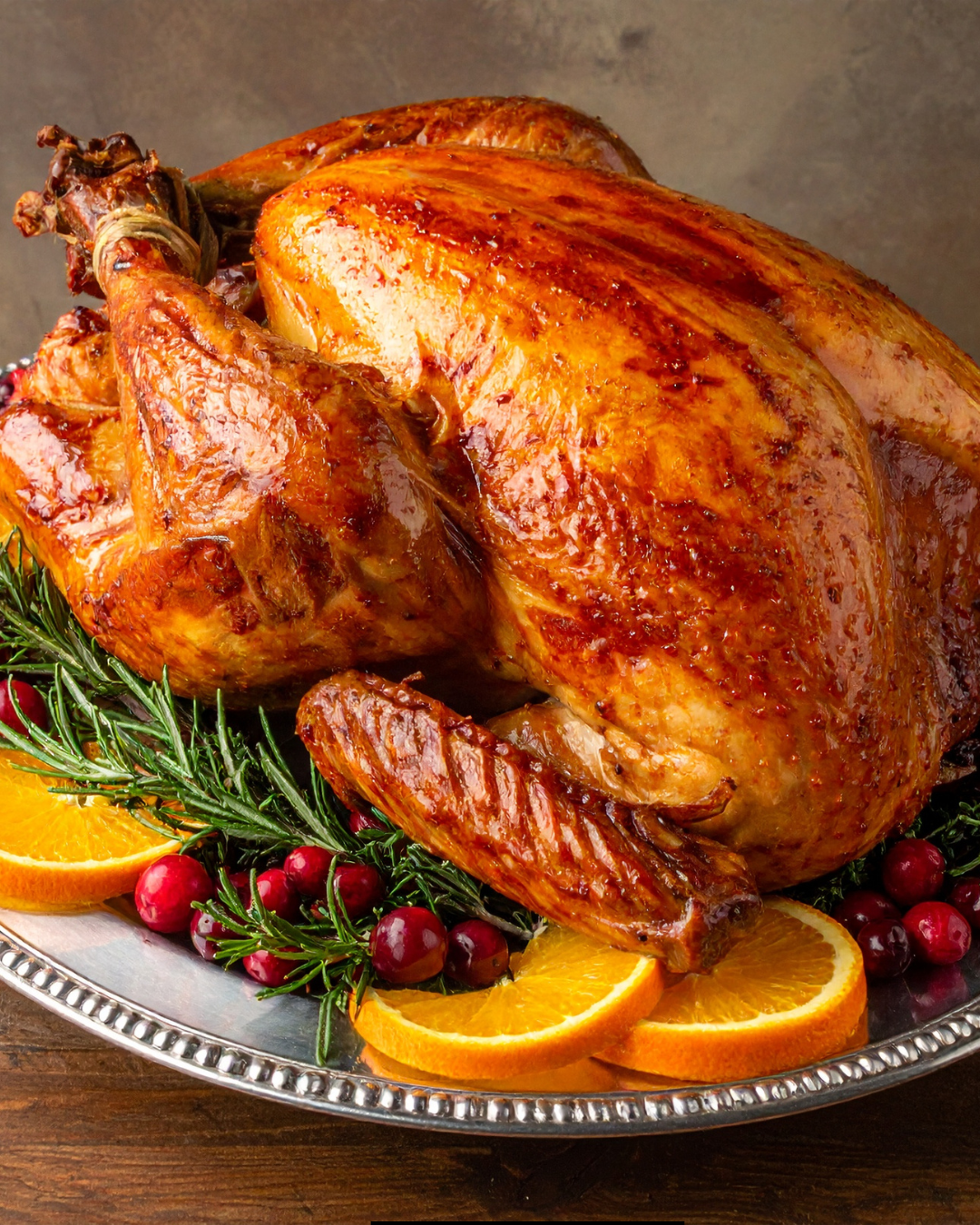
If you’ve ever struggled with a dry, bland bird during the holidays (we’ve all been there!), Then Gordon Ramsay Turkey recipe is about to be your culinary game-changer. His expert techniques ensure a turkey that’s juicy, golden, and bursting with flavor — exactly what we strive for when gathering family and friends around the table.
Table of Contents
How to make Gordon Ramsay Turkey
Gordon Ramsay Turkey is a style of roasted turkey dish popularized by Gordon Ramsay, typically made by seasoning a whole turkey with herb butter, garlic, lemon, parsley, and other aromatics before roasting it until golden and juicy.
Ingredients
For the Turkey:
- 1 whole turkey (about 10–12 lbs, adjust based on your party size)
- Sea salt and freshly ground black pepper (for seasoning)
For the Herb Butter:
- 1 cup unsalted butter (softened)
- 2 garlic cloves, minced
- Zest of 2 lemons
- Juice of 1 lemon
- 2 tablespoons parsley, finely chopped
- 1 tablespoon thyme, finely chopped
- Optional: sage leaves, minced
For the Cavity Fill:
- 2 lemons, halved
- 2 garlic bulbs, halved horizontally
- 1 large onion, halved
- A few sprigs of fresh rosemary and thyme
For Basting and Gravy:
- Olive oil or turkey drippings
- Optional: 1 cup white wine (for added flavor during roasting)
Drippings from the turkey pan for gravy
- 2 tablespoons flour
- Chicken stock (about 2–3 cups)
Instructions
- Preheat the oven: Set it to 425°F (220°C). This high temperature helps crisp up the turkey skin initially.
- Season the turkey: Generously season the turkey inside and out with sea salt and freshly ground black pepper.
- Make the herb butter: In a bowl, mix the softened butter with garlic, lemon zest, lemon juice, parsley, thyme, and sage. Ensure the butter is smooth and well-combined.
- Carefully loosen the skin from the turkey breast using your fingers or a spatula. Be gentle to avoid tearing the skin. Spread the herb butter evenly under the skin; this helps flavor the meat directly and keeps it moist during cooking.
- Stuff the turkey cavity with halved lemons, garlic bulbs, onion, rosemary, and thyme. These aromatics lightly infuse the turkey while roasting, adding a depth of flavor without drying it out.
- Place the turkey in the roasting pan: Lay it on a rack within the pan. Drizzle olive oil over the bird or brush melted butter on the skin for extra crispiness.
- Initial blast: Roast the turkey at 425°F for 30 minutes to create a golden, crispy skin.
- Lower the temperature: Reduce the heat to 350°F (175°C) and cook the turkey for another 2.5–3 hours, depending on the size. Most turkeys need 18–20 minutes per pound at this stage.
- Baste frequently: Every 30 minutes, baste the turkey using the drippings in the pan (or a mix of melted butter and wine). This keeps the meat moist and builds layers of flavor.
- Use a meat thermometer to check the internal temperature. The thickest part of the breast should read 165°F (74°C), while the thigh should be around 170°F (77°C).
- One of Ramsay’s most important tips is to rest the turkey for 45 minutes to an hour after removing it from the oven. Cover lightly with foil during this period. Resting allows the juices to redistribute throughout the meat, ensuring every bite is juicy and tender.
- Prepare the pan drippings: After removing the turkey from the roasting pan, pour the drippings into a saucepan.
- Thicken the gravy: Add 2 tablespoons of flour to the drippings and whisk over medium heat until smooth. Slowly pour in the chicken stock and continue whisking until the gravy reaches your preferred consistency.
- Enhance the flavor: Add a splash of white wine, fresh rosemary, or black pepper for a deeper flavor profile.
Pro Tips for Success
- Choose the right turkey: A fresh, free-range turkey usually has better flavor and texture compared to frozen options.
- Season generously: Don’t skimp on the salt and pepper. Proper seasoning is key to enhancing the bird’s natural flavors.
- Don’t rush the resting stage: Resting ensures the juices don’t escape when carving, making the meat tender instead of dry.
- Basting is your friend: The moment you forget to baste is when your turkey can dry out. Set a timer to remind yourself every 30 minutes.
- Use a thermometer: This is one of the most reliable ways to ensure you don’t overcook the turkey.
Ingredients Substitutes
Whether you’re missing a few ingredients or catering to dietary preferences, substitutions are a lifesaver when making Gordon Ramsay turkey recipe.
1. Turkey Substitutes (Main Protein)
- Chicken or Cornish Hen: If your gathering is small and a whole turkey feels excessive, opt for a smaller bird like chicken or Cornish hen. Both are tender and require much less cooking time.
- Turkey Breast or Thighs: For a leaner or quicker option, use just turkey breast or thighs instead of a whole turkey. These cuts are easy to prepare and perfect for a smaller group.
- Vegetarian Alternative – Whole Roasted Cauliflower: For vegetarians, a large roasted cauliflower, seasoned with the same herb butter as the original recipe, can make a stunning centerpiece. Or try a vegan roast like those offered by brands such as Field Roast or Tofurky.
2. Herb Butter Substitutes
Gordon Ramsay Turkey recipe is known for the herb butter that gets slathered under the skin. Here are some alternatives and adaptable components:
Butter Substitute:
- Olive Oil or Coconut Oil: If you’re out of butter, olive oil or coconut oil make great substitutes for achieving moisture and flavor.
- Plant-Based Butter: For vegans, you can use dairy-free butter like Miyoko’s Creamery or Earth Balance.
Herb Substitutes:
- If you don’t have fresh herbs like parsley, thyme, or sage, dried herbs can work. Use about 1/3 of the amount since dried herbs are more concentrated in flavor.
- Swap parsley with cilantro for a fresher twist or use oregano for a Mediterranean-inspired flavor.
Lemon Zest and Juice:
- Replace lemon with lime for a similar citrus brightness.
- Vinegar (like apple cider or white wine vinegar) can mimic the acidity of lemon juice—use sparingly.
3. Aromatics for the Turkey Cavity
Stuffing the cavity with fresh aromatics like lemons, onions, and garlic is a signature part of Gordon Ramsay Turkey recipe. If you don’t have these specific ingredients, try the following:
Lemons Substitute:
- Use oranges if you want a slightly sweeter citrus flavor.
- Apples can also work, infusing a subtle sweetness into the turkey as it roasts.
Onion Substitute:
- Shallots or leeks are a great replacement for onions and add a slightly milder flavor.
- In a pinch, use onion powder, but sprinkle it on the turkey instead of stuffing it inside.
Garlic Substitute:
- Use garlic powder or minced jarred garlic. If neither is available, skip garlic entirely or substitute with onion for a similar savory depth.
4. Turkey Gravy Substitutes
Turkey gravy traditionally uses pan drippings, flour, and stock. But if you find yourself missing key ingredients, here’s how to adapt:
Turkey Drippings Substitute:
- Use store-bought chicken stock or broth if you don’t have turkey drippings.
- Vegetable stock works for a vegetarian option.
- Add a splash of white wine or soy sauce if you want to enhance the flavor of a store-bought broth.
Flour Substitute:
- Use cornstarch or arrowroot powder instead of flour for a gluten-free gravy.
- Mashed potatoes or potato flakes can also work as a thickener.
Final Thoughts
By following Gordon Ramsay turkey recipe, you’ll create a centerpiece that’s flavorful, juicy, and worthy of a Michelin-star kitchen.
More Recipes:
Ingredients
For the Turkey:
- 1 whole turkey
- Sea salt and freshly ground black pepper
For the Herb Butter:
- 1 cup unsalted butter (softened)
- 2 garlic cloves, minced
- Zest of 2 lemons
- Juice of 1 lemon
- 2 tablespoons parsley, finely chopped
- 1 tablespoon thyme, finely chopped
- Optional: sage leaves, minced
For the Cavity Fill:
- 2 lemons, halved
- 2 garlic bulbs, halved horizontally
- 1 large onion, halved
- A few sprigs of fresh rosemary and thyme
For Basting and Gravy:
- Olive oil or turkey drippings
- Optional: 1 cup white wine
Drippings from the turkey pan for gravy
- 2 tablespoons flour
- Chicken stock (about 2–3 cups)
Instructions
- Preheat the oven: Set it to 425°F (220°C). This high temperature helps crisp up the turkey skin initially.
- Season the turkey: Generously season the turkey inside and out with sea salt and freshly ground black pepper.
- Make the herb butter: In a bowl, mix the softened butter with garlic, lemon zest, lemon juice, parsley, thyme, and sage. Ensure the butter is smooth and well-combined.
- Carefully loosen the skin from the turkey breast using your fingers or a spatula. Be gentle to avoid tearing the skin. Spread the herb butter evenly under the skin; this helps flavor the meat directly and keeps it moist during cooking.
- Stuff the turkey cavity with halved lemons, garlic bulbs, onion, rosemary, and thyme. These aromatics lightly infuse the turkey while roasting, adding a depth of flavor without drying it out.
- Place the turkey in the roasting pan: Lay it on a rack within the pan. Drizzle olive oil over the bird or brush melted butter on the skin for extra crispiness.
- Initial blast: Roast the turkey at 425°F for 30 minutes to create a golden, crispy skin.
- Lower the temperature: Reduce the heat to 350°F (175°C) and cook the turkey for another 2.5–3 hours, depending on the size. Most turkeys need 18–20 minutes per pound at this stage.
- Baste frequently: Every 30 minutes, baste the turkey using the drippings in the pan (or a mix of melted butter and wine). This keeps the meat moist and builds layers of flavor.
- Use a meat thermometer to check the internal temperature. The thickest part of the breast should read 165°F (74°C), while the thigh should be around 170°F (77°C).
- One of Ramsay's most important tips is to rest the turkey for 45 minutes to an hour after removing it from the oven. Cover lightly with foil during this period. Resting allows the juices to redistribute throughout the meat, ensuring every bite is juicy and tender.
- Prepare the pan drippings: After removing the turkey from the roasting pan, pour the drippings into a saucepan.
- Thicken the gravy: Add 2 tablespoons of flour to the drippings and whisk over medium heat until smooth. Slowly pour in the chicken stock and continue whisking until the gravy reaches your preferred consistency.
- Enhance the flavor: Add a splash of white wine, fresh rosemary, or black pepper for a deeper flavor profile.
Discover more from Gordon Ramsay Dish
Subscribe to get the latest posts sent to your email.