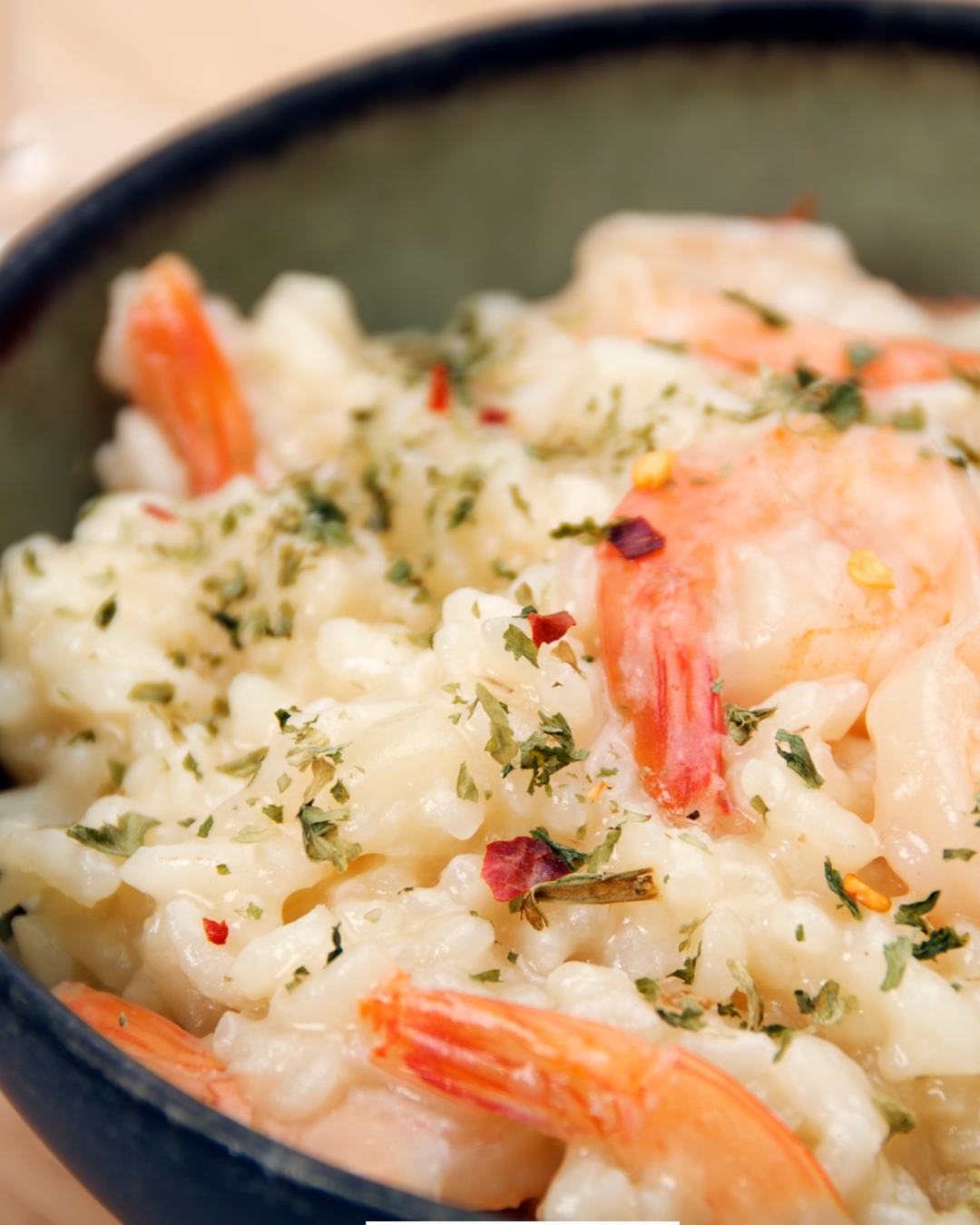
I’ve always found risotto to be a bit intimidating. It’s one of those dishes that require patience and focus, but when done right, the result is nothing short of spectacular. And when you add succulent shrimp into the mix? You’ve got yourself a recipe that’s restaurant-quality but achievable in your own kitchen. That’s what Gordon Ramsay’s Shrimp Risotto is all about: taking simple ingredients and elevating them into something extraordinary.
If you’ve ever watched Gordon Ramsay whip up a risotto with his signature flair, you know it’s not just about the ingredients; it’s about the process, the love, and the passion for cooking.
Table of Contents
How to make Gordon Ramsay’s Shrimp Risotto
Gordon Ramsay’s Shrimp Risotto is a creamy Italian-style rice dish made with shrimp/prawns, Arborio rice, stock, white wine, garlic, shallots, Parmesan, butter, and often lemon and herbs.
Ingredients
For the Shrimp:
- 1 lb (450g) large shrimp, peeled and deveined
- 1-2 tbsp olive oil or butter (as preferred)
- 1 tsp garlic, minced
- Salt and pepper, to taste
- 1/4 tsp paprika or chili flakes (optional, for a slight kick)
- Juice of 1/2 lemon (to brighten up the shrimp)
For the Risotto Base:
- 1 cup (200g) Arborio rice (short-grain, highly starchy rice for perfect creaminess)
- 2 tbsp olive oil or butter
- 1 medium shallot or 1/2 onion, finely diced
- 2 garlic cloves, minced
- 1/3 cup dry white wine (like Sauvignon Blanc or Pinot Grigio)
- 4 cups chicken, seafood, or vegetable stock, kept warm in a separate pot
- 1/2 cup grated Parmesan cheese
Optional Garnishes:
- Fresh parsley, finely chopped
- Zest of 1 lemon
Instructions
Step 1: Prepare the Shrimp
- Heat 1-2 tablespoons of olive oil (or butter) in a medium skillet over medium-high heat.
- Add the shrimp and season with salt, pepper, paprika, or chili flakes (if using). Sauté for 2-3 minutes on each side until the shrimp turn pink and are cooked through. Be careful not to overcook them! Shrimp should be tender, not rubbery.
- Add 1 teaspoon of garlic and the juice of half a lemon. Stir for about 1 minute to blend the flavors.
- Remove the shrimp from the pan and set aside.
Step 2: Start the Risotto Base
- In a large, deep pan or skillet, heat 2 tablespoons of olive oil or butter over medium heat.
- Add the diced shallots (or onions) and minced garlic. Sauté for 2-3 minutes until softened and fragrant. Be careful not to let them burn.
- Add the Arborio rice and stir for 1-2 minutes, ensuring each grain is coated in the aromatic oil. Toasting the rice helps unlock its delicious flavor and prepares it to absorb liquid.
Step 3: Deglaze with Wine
- Pour in 1/3 cup of dry white wine and stir continuously until the liquid has mostly evaporated. This step will add acidity and richness to the dish.
Step 4: Cook the Risotto
- Start adding the warm stock, one ladle at a time. Stir frequently to allow the rice to absorb the liquid. Once the stock is nearly absorbed, add another ladle. Repeat this process, which should take about 18-20 minutes.
- As the risotto cooks, you’ll notice it becoming creamy, which is a result of the rice releasing its starch.
Step 5: Incorporate the Shrimp
- When the rice is almost tender (you should taste-test toward the end), stir in the cooked shrimp. Allow the shrimp to heat through and infuse the risotto with its flavor.
Step 6: Finish the Dish
- Remove the risotto from the heat and stir in the grated Parmesan cheese for richness. You can add a small knob of butter if you want an extra silky texture.
- Adjust the seasoning with salt and pepper if needed.
- For brightness, garnish with fresh parsley and a touch of lemon zest.
Tips for Success
- Keep the Stock Warm: Always use warm stock for risotto to maintain an even cooking temperature and prevent shocking the rice.
- Stir, Don’t Rush: Stir frequently but gently so the rice doesn’t stick to the pan and cooks evenly. The gradual stirring is what creates the creamy consistency.
- Don’t Overcook the Shrimp: Cook shrimp separately and incorporate them at the end to avoid rubbery or overcooked shrimp.
- Taste Often: Start tasting the rice about 15 minutes in to check its texture. The ideal consistency is tender with a slight bite (al dente).
- Serve Immediately: Risotto waits for no one! It’s best enjoyed fresh when it’s at its creamiest.
What to serve with Gordon Ramsay’s Shrimp Risotto
Gordon Ramsay’s Shrimp Risotto is a rich and comforting dish that pairs creamy, savory rice with tender shrimp. While it can absolutely shine as a standalone meal, pairing it with complementary side dishes and drinks can elevate your experience to a fine dining level.
1. Light Salads
A crisp, refreshing salad provides the perfect contrast to the creamy risotto.
- Arugula and Parmesan Salad: The peppery bite of arugula, paired with shavings of Parmesan, lemon juice, and a drizzle of olive oil, cuts through the richness of the dish while mirroring some of its flavors.
- Simple Mixed Greens Salad: Toss fresh greens with cherry tomatoes, cucumbers, red onions, and a light vinaigrette. Add a sprinkle of toasted nuts for crunch!
- Citrus Fennel Salad: Sliced fennel with orange or grapefruit segments, olive oil, and a splash of white balsamic vinegar creates a zesty and refreshing highlight.
2. Crusty Bread
Bread is a natural accompaniment to Gordon Ramsay’s Shrimp Risotto, giving you something to enjoy between bites or for scooping up the creamy sauce.
- Garlic Bread: Lightly toasted baguette slices brushed with garlic butter work beautifully, adding both texture and even more flavor to your plate.
- Rosemary Focaccia: This Italian flatbread is soft, herby, and savory—perfect for balancing out the shrimp risotto.
- Artisan Sourdough: The slight tang from sourdough complements the salty savoriness of the Parmesan cheese in the risotto.
3. Garlic or Lemon Roasted Vegetables
Roasted vegetables add color, flavor, and nutrients to your meal. Choose lighter vegetables so they don’t overpower the delicate flavor of the shrimp.
- Asparagus: Roast asparagus spears with olive oil and a sprinkle of salt, or toss with a squeeze of lemon after roasting.
- Zucchini and Yellow Squash: Thinly slice these summer favorites and roast them with garlic, herbs, and parmesan.
- Green Beans: Sautéed or roasted green beans with a touch of garlic or a sprinkle of chili flakes make for a vibrant side.
Ingredients Substitutes
One of the beautiful things about cooking is its flexibility, and even a refined dish like Gordon Ramsay’s Shrimp Risotto allows room for substitutions if specific ingredients aren’t available, or if you need to adapt the dish for dietary preferences.
1. Arborio Rice Substitute
Arborio rice is the traditional rice used for risotto because of its high starch content, which gives risotto its signature creaminess. If you don’t have Arborio rice, here are alternatives:
- Carnaroli Rice or Vialone Nano: These are other types of short-grain Italian rice that behave similarly to Arborio. Carnaroli is particularly creamy and can even produce an elevated result.
- Sushi Rice: The short, starchy grains of sushi rice work well as a substitute in a pinch, but the flavor will be slightly different.
- Pearl Barley or Farro: These ancient grains can replicate the creamy consistency of risotto (technically called orzotto or farrotto). They take longer to cook and have a nuttier flavor.
- Couscous or Quinoa: While not ideal, these small grains can mimic the texture, but you won’t achieve the creamy risotto consistency without starch. Add butter or cream at the end for extra richness.
- Avoid: Long-grain rice like basmati or jasmine, as they don’t release enough starch to create creaminess.
2. Shrimp Substitute
Shrimp is the star of this dish, but other seafood or proteins can complement a creamy risotto when shrimp isn’t an option.
- Scallops: Seared scallops are luxurious and pair beautifully with the flavors of the risotto. Try either bay scallops (smaller) or larger sea scallops.
- Clams or Mussels: These add a briny, seafood-forward taste to the dish.
- Chicken: Substitute sautéed chicken breast or thighs for a non-seafood, protein-packed option.
- Vegetarian Option: Replace shrimp with roasted vegetables (such as asparagus, mushrooms, or zucchini) for an earthy, plant-based version.
- Smoked Salmon: Stir in small pieces toward the end for a unique, smoky seafood twist.
- Chickpeas or White Beans: For a vegetarian protein substitute, stir in chickpeas or cannellini beans.
3. Stock Substitute
Stock is essential for cooking risotto since it deeply flavors the rice during the cooking process. If you don’t have seafood stock or chicken stock on hand, here are alternatives:
- Vegetable Stock: Works well, especially for vegetarian risotto, though it may be less flavorful. Enhance it by simmering it with shrimp shells, garlic, or herbs if available.
- Seafood Stock Alternatives: If you don’t have homemade seafood stock, dissolve clam juice or fish bouillon in hot water to create a quick and flavorful seafood broth.
- Water: In a pinch, you can use water, but be sure to season the risotto generously to make up for the lack of richness.
4. White Wine Substitute
White wine is often used in risotto to add acidity and complexity to the flavor, but if you don’t have it or prefer a nonalcoholic option, try these:
- Dry Vermouth: A small quantity of vermouth can act as a substitute for white wine when cooking.
- Lemon Juice or White Vinegar: Use a small splash (1-2 teaspoons) of lemon juice or white vinegar with an additional 2-3 tablespoons of water to mimic the acidity.
- Chicken or Vegetable Stock: Extra stock can stand in for wine, though it won’t provide the same acidity. Add some lemon juice for balance.
- Apple Cider Vinegar: A teaspoon of apple cider vinegar diluted with water can be a suitable nonalcoholic replacement.
5. Parmesan Cheese Substitute
Parmesan adds a nutty, umami-rich flavor to Gordon Ramsay’s Shrimp Risotto, but there are options if you don’t have it or need a substitute for dietary reasons.
- Grana Padano or Pecorino Romano: These Italian cheeses are the closest substitutes. Pecorino is a bit saltier and sharper than Parmesan, so use it sparingly.
- Aged Cheddar: For a richer but accessible alternative, aged cheddar works well.
- Vegan Cheese: Nutritional yeast is a great vegan option; it has a nutty, cheesy flavor. You can also use a store-bought vegan Parmesan substitute.
- Feta or Goat Cheese: These are softer cheeses with tangy flavors, which can make a great addition to a risotto if Parmesan isn’t available.
Final Thoughts
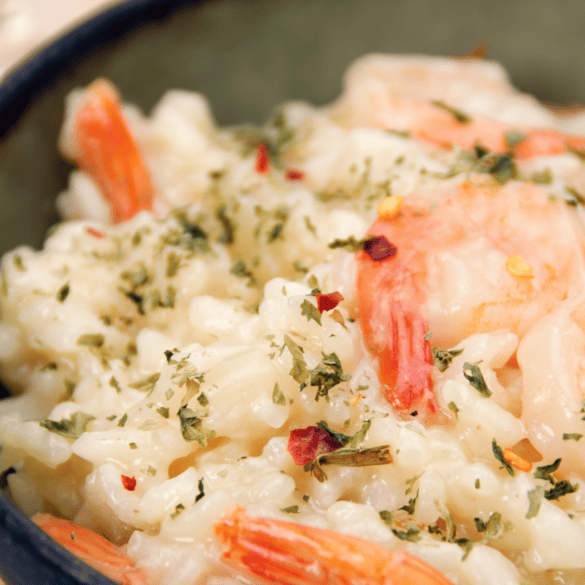
Gordon Ramsay’s Shrimp Risotto is a masterclass in elevating simple ingredients into a decadent dish. The creamy texture of the risotto paired with perfectly cooked shrimp creates a meal that’s both comforting and impressive.
More Risotto Recipes:
- Gordon Ramsay Crab Risotto Recipe
- Gordon Ramsay Parmesan Risotto Recipe
- Copycat Gordon Ramsay Lobster Risotto Recipe
- Copycat Gordon Ramsay Risotto Recipe
Ingredients
For the Risotto Base:
- 1 cup (200g) Arborio rice
- 2 tbsp olive oil or butter
- 1 medium shallot or 1/2 onion, finely diced
- 2 garlic cloves, minced
- 1/3 cup dry white wine
- 4 cups chicken, seafood, or vegetable stock
- 1/2 cup grated Parmesan cheese
Optional Garnishes:
- Fresh parsley, finely chopped
- Zest of 1 lemon
Instructions
Step 1: Prepare the Shrimp
- Heat 1-2 tablespoons of olive oil (or butter) in a medium skillet over medium-high heat.
- Add the shrimp and season with salt, pepper, paprika, or chili flakes (if using). Sauté for 2-3 minutes on each side until the shrimp turn pink and are cooked through. Be careful not to overcook them! Shrimp should be tender, not rubbery.
- Add 1 teaspoon of garlic and the juice of half a lemon. Stir for about 1 minute to blend the flavors.
- Remove the shrimp from the pan and set aside.
Step 2: Start the Risotto Base
- In a large, deep pan or skillet, heat 2 tablespoons of olive oil or butter over medium heat.
- Add the diced shallots (or onions) and minced garlic. Sauté for 2-3 minutes until softened and fragrant. Be careful not to let them burn.
- Add the Arborio rice and stir for 1-2 minutes, ensuring each grain is coated in the aromatic oil. Toasting the rice helps unlock its delicious flavor and prepares it to absorb liquid.
Step 3: Deglaze with Wine
- Pour in 1/3 cup of dry white wine and stir continuously until the liquid has mostly evaporated. This step will add acidity and richness to the dish.
Step 4: Cook the Risotto
- Start adding the warm stock, one ladle at a time. Stir frequently to allow the rice to absorb the liquid. Once the stock is nearly absorbed, add another ladle. Repeat this process, which should take about 18-20 minutes.
- As the risotto cooks, you’ll notice it becoming creamy, which is a result of the rice releasing its starch.
Step 5: Incorporate the Shrimp
- When the rice is almost tender (you should taste-test toward the end), stir in the cooked shrimp. Allow the shrimp to heat through and infuse the risotto with its flavor.
Step 6: Finish the Dish
- Remove the risotto from the heat and stir in the grated Parmesan cheese for richness. You can add a small knob of butter if you want an extra silky texture.
- Adjust the seasoning with salt and pepper if needed.
- For brightness, garnish with fresh parsley and a touch of lemon zest.
Discover more from Gordon Ramsay Dish
Subscribe to get the latest posts sent to your email.